
-
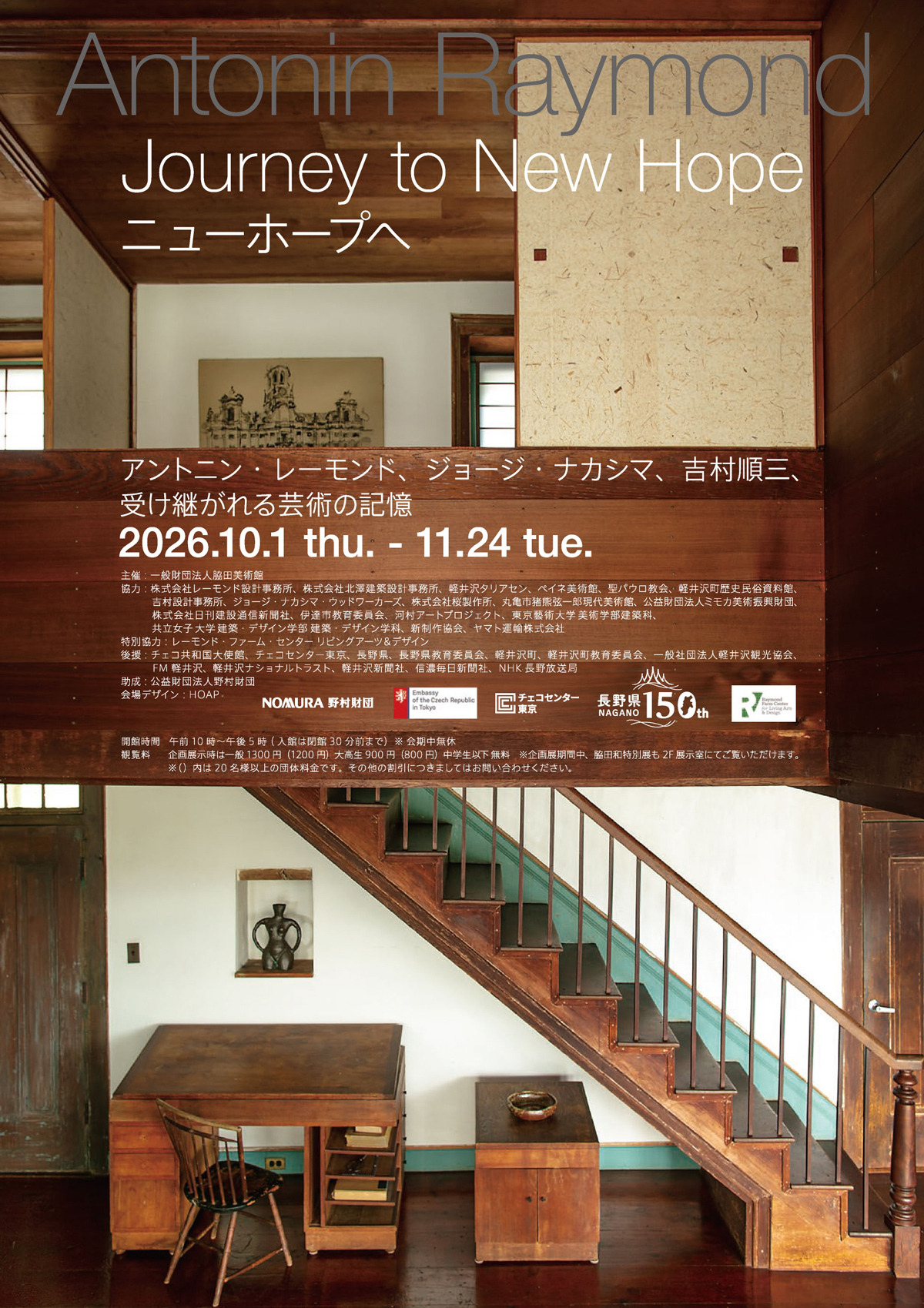
Journey to New Hope ニューホープへ
アントニン・レーモンド、ジョージ・ナカシマ、吉村順三、受け継がれる芸術の記憶
-
 Photograph: Charlotte Raymond
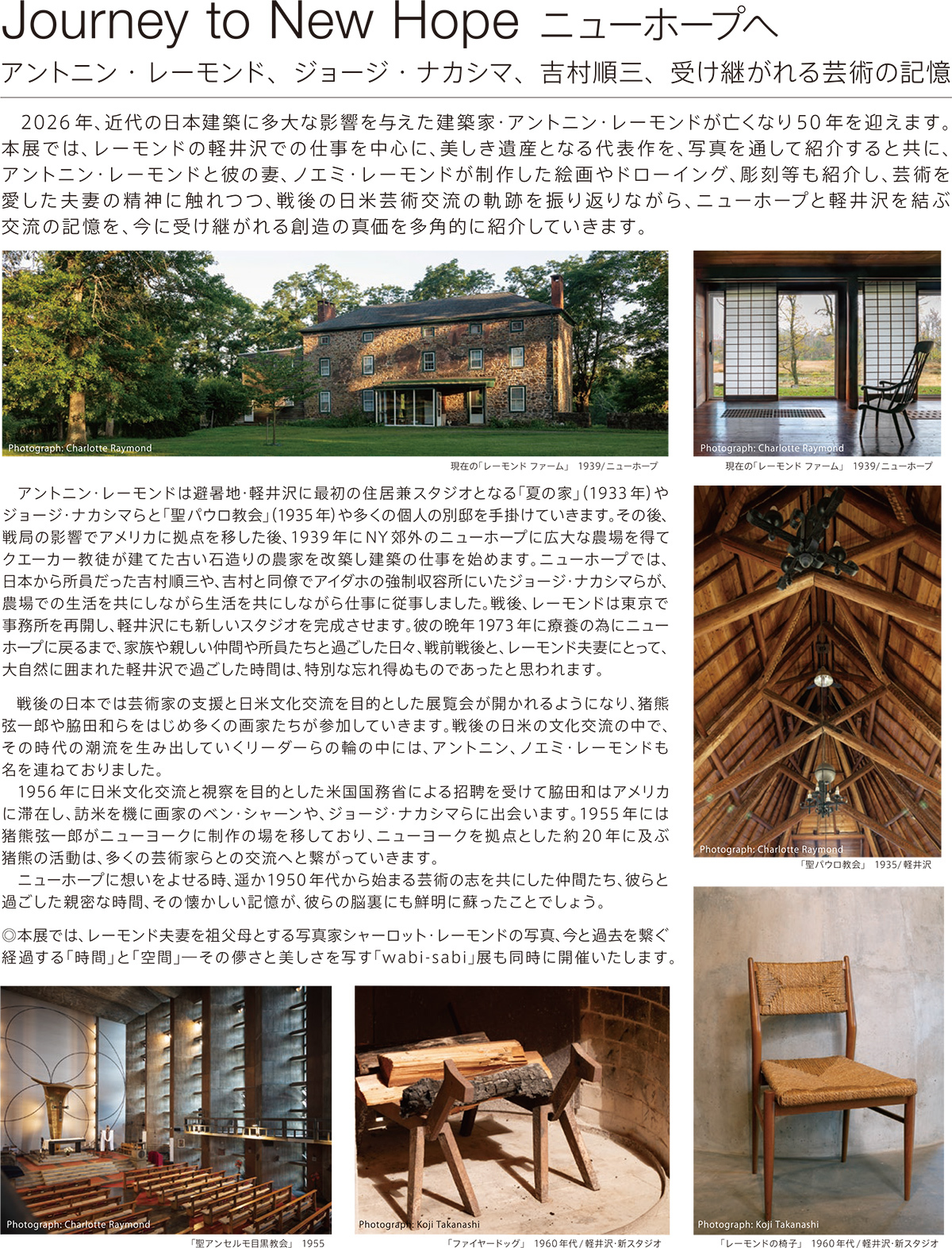
2026年、近代の日本建築に多大な影響を与えた建築家・アントニン・レーモンドが亡くなり50年を迎えます。本展では、レーモンドの軽井沢での仕事を中心に、美しき遺産となる代表作を、写真を通して紹介すると共に、アントニン・レーモンドと彼の妻、ノエミ・レーモンドが制作した絵画やドローイング、彫刻等も展示し、芸術を愛した夫妻の精神に触れつつ、戦後の日米芸術交流の軌跡を振り返りながら、ニューホープと軽井沢を結ぶ交流の記憶を、今に受け継がれる創造の真価を多角的に紹介していきます。
Journey to New Hope
Period: Oct 1st (Thu) 2026 to November 24th (Tue)
Antonin Raymond, George Nakashima, and Junzo Yoshimura: An Artistic LegacyThe year 2026 marks the 50th anniversary of the death of Antonin Raymond, an architect who had a profound influence on modern Japanese architecture. This exhibition focuses on Raymond's work in Karuizawa, presenting his representative works, which is a beautiful legacy, through photographs. At the same time, we will also introduce paintings, drawings, sculptures, etc. created by Antonin Raymond and his wife Noemi Raymond, and while touching on the spirit of Mr. and Mrs. Raymond who loved art, we will look back on the history of postwar art exchange between Japan and the United States. We present from a multifaceted perspective the memories of the exchange that connected New Hope and Karuizawa, and the true value of creativity that has been passed down to this day.
アントニン・レーモンドは避暑地・軽井沢に最初の住居兼スタジオとなる「夏の家」(1933年)やジョージ・ナカシマらと「聖パウロ教会(」1935年)や多くの個人の別邸を手掛けていきます。その後、戦局の影響でアメリカに拠点を移した後、1939年にNY郊外のニューホープに広大な農場を得てクエーカー教徒が建てた古い石造りの農家を改築し建築の仕事を始めます。ニューホープでは、日本から所員だった吉村順三や、吉村と同僚でアイダホの強制収容所にいたジョージ・ナカシマらが、農場での生活を共にしながら仕事に従事しました。戦後、レーモンドは東京で事務所を再開し、軽井沢にも新しいスタジオを完成させます。彼の晩年1973年に療養の為にニューホープに戻るまで、家族や親しい仲間や所員たちと過ごした日々、戦前戦後と、レーモンド夫妻にとって、大自然に囲まれた軽井沢で過ごした時間は、特別な忘れ得ぬものであったと思われます。
戦後の日本では芸術家の支援と日米文化交流を目的とした展覧会が開かれるようになり、猪熊弦一郎や脇田和らをはじめ多くの画家たちが参加していきます。戦後の日米の文化交流の中で、その時代の潮流を生み出していくリーダーらの輪の中には、アントニン、ノエミ・レーモンドも名を連ねておりました。
1956年に日米文化交流と視察を目的とした米国国務省による招聘を受けて脇田和はアメリカに滞在し、訪米を機に画家のベン・シャーンや、ジョージ・ナカシマらに出会います。1955年には猪熊弦一郎がニューヨークに制作の場を移しており、ニューヨークを拠点とした約20年に及ぶ猪熊の活動は、多くの芸術家らとの交流へと繋がっていきます。ニューホープに想いをよせる時、遥か1950年代から始まる芸術の志を共にした仲間たち、彼らと過ごした親密な時間、その懐かしい記憶が、彼らの脳裏にも鮮明に蘇ったことでしょう。◎本展では、レーモンド夫妻を祖父母とする写真家シャーロット・レーモンドの写真、今と過去を繋ぐ経過する「時間」と「空間」―その儚さと美しさを写す「wabi-sabi」展も同時に開催いたします。
Antonin Raymond designed his first residence and studio, "Summer House" (1933), and "St. Paul's Church" (1935) in the summer resort town of Karuizawa, in working with George Nakashima, etc., as well as many other private residences. Later, due to the war situation, he moved his base to the United States, and in 1939, he acquired a vast farm in New Hope, a suburb of New York, and began his architectural work by renovating an old stone farmhouse built by Quakers. At New Hope, Junzo Yoshimura, Raymond’s Office staff member from Japan, and George Nakashima, who was also a colleague of Yoshimura and held in an internment camp in Idaho, lived and worked together. After the war, Raymond reopened his office in Tokyo and also completed a new studio in Karuizawa. In his later years, until he returned to New Hope for medical treatment in 1973, the days spent with his family, close friends, and staff members in Karuizawa, surrounded by nature, both before and after the war, must have been special and unforgettable for Raymond and his wife.
In postwar Japan, exhibitions aimed at supporting artists and promoting cultural exchange between Japan and the United States began to be held, and many painters, including Genichiro Inokuma and Kazu Wakita, started to participate in such exhibitions. In the postwar cultural exchange between Japan and the United States, Antonin and Noemi Raymond were among the leaders who created the trends of the time.
In 1956, Kazu Wakita was invited by the U.S. Department of State for the purpose of cultural exchange and observation between the United States and Japan, and stayed in the United States, where he met painters Ben Shahn, George Nakashima, and others. In 1955, Genichiro Inokuma moved his studio to New York, and his approximately 20 years of activity based in New York led to interactions with many artists.
When they thought about New Hope, the nostalgic memories of the friends who shared their artistic ambitions that began in the 1950s, and the intimate times they spent together, must have come back vividly in their minds.◎This exhibition will also present the “wabi-sabi” exhibition, which depicts the transience and beauty of the passing “time” and “space” that connect the present and the past, with photographs by photographer Charlotte Raymond, whose grandparents are the Raymonds.
スケジュール
2026年10月1日(木)~11月24日(火) 午前10時~午後5時 開催概要
主催 一般財団法人脇田美術館
協力 株式会社レーモンド設計事務所、株式会社北澤建築設計事務所、軽井沢タリアセン、ペイネ美術館、聖パウロ教会、軽井沢町歴史民俗資料館、吉村設計事務所、ジョージ・ナカシマ・ウッドワーカーズ、株式会社桜製作所、丸亀市猪熊弦一郎現代美術館、公益財団法人ミモカ美術振興財団、株式会社日刊建設通信新聞社、伊達市教育委員会、河村アートプロジェクト、東京藝術大学 美術学部建築科、共立女子 大学 建築・デザイン学部 建築・デザイン学科、新制作協会、ヤマト運輸株式会社 特別協力 レーモンド・ファーム・センター リビングアーツ&デザイン
後援 チェコ共和国大使館、チェコセンター東京、長野県、長野県教育委員会、軽井沢町、軽井沢町教育委員会、一般社団法人軽井沢観光協会、 FM 軽井沢、軽井沢ナショナルトラスト、軽井沢新聞社、信濃毎日新聞社、NHK 長野放送局 助成 公益財団法人野村財団 会場デザイン HOAP 観覧料 企画展示時は一般 1300円(1200円)大高生 900円(800円)中学生以下無料
※企画展期間中、脇田和特別展も 2F 展示室にてご覧いただけます。
※()内は 20名様以上の団体料金です。その他の割引につきましてはお問い合わせください。
アクセス ・ 電車 長野新幹線・しなの鉄道「軽井沢駅」下車 旧軽井沢銀座方面へ徒歩10分
・ 車 上信越道「碓氷軽井沢インター」から国道18号線を旧軽井沢方面へ約20km所在地 〒389-0102 長野県北佐久郡軽井沢町旧道1570-4
アクセスマップはコチラ電話番号 0267-42-2639 Schedule
Oct 1st (Thu) 2026 to November 24th (Tue) 10:00~17:00 Event Overview
Organized by Wakita Museum of Art Cooperation
Raymond Architectural Design Office; Kitazawa Architectural Design Office; Karuizawa Taliesin; Peynet Museum; St. Paul's Catholic Church; Karuizawa Town Museum of History and Folklore; Yoshimura Architectural Design Office; George Nakashima Woodworkers; Sakura Seisakusho Co., Ltd.; Marugame Genichiro-Inokuma Museum of Contemporary Art; The MIMOCA Foundation; Nikkan Kensetsu Tsushin Shimbun Corporaton; Date City Board of Education; Kawamura Art Project; Department of Architecture, Faculty of Fine Arts, Tokyo University of the Arts; Department of Architecture and Design, Faculty of Architecture and Design, Kyoritsu Women's University; Shin-Seisaku Art Society; Yamato Transport Co., Ltd. Special Cooperation Raymond Farm Center - Living Arts & Design Supported by Embassy of the Czech Republic; Czech Centre Tokyo; Nagano Prefecture; Nagano Prefectural Board of Education; Karuizawa Town; Karuizawa Town Board of Education; Karuizawa Tourism Association; FM Karuizawa; Karuizawa National Trust; Karuizawa Shimbun; Shinano Mainichi Shimbun; NHK Nagano Broadcasting Station. Grant provided by Nomura Foundation Venue design HOAP Admission Fees General/ 1,300 yen (1,200 yen); University & High School Students/900 yen (800 yen); Junior High Students & Younger/ Free.
※During the special exhibition period, the Kazu Wakita Special Exhibition is also open for viewing in the 2nd-floor gallery.
※Prices in parentheses apply to groups of 20 or more. Please contact us regarding other discounts.Access ・By Train: Get off at Karuizawa Station (Nagano Shinkansen / Shinano Railway); 10-minute walk towards Kyu-Karuizawa Ginza.
・By Car: Approx. 20 km from Usui-Karuizawa Interchange (Joshin-etsu Expressway) via Route 18 towards Kyu-Karuizawa.Address 1570-4 Kyudo, Karuizawa-machi, Kitasaku-gun, Nagano 389-0102
Click here for the access mapPhone Number 0267-42-2639


