Excellent figurative arts deny language in the first place. Or rather than denying language, it exists beyond explanation by language; therefore, language loses its validity.
The same goes with excellent music. Emotion wells deeper down than language. It takes time before emotion comes into language. When we face excellent art, we remain speechless. For a while, we immerse ourselves in the edge of profound emotion. Expression of “remain speechless” means exactly this state of mind. And, the first word coming out of my mouth is “oh”. It should be called, not a word, but a cry. Exaltation ebbs, and then finally we can start turning the emotion into words.
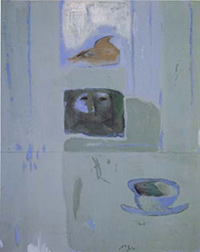
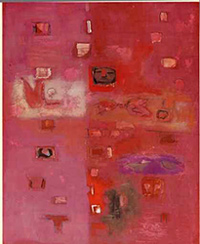
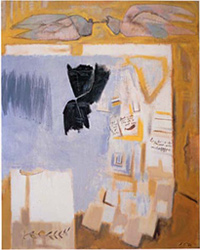
Paintings of Mr. Wakita do not provide us with shocking impression. It is not pressure from exterior. Instead, they move and awake warmly our certain delicate and dense emotion asleep deep inside us. Mr. Wakita’s paintings can be expressed as dense “form of life” in a state where conscious and unconscious are undifferentiated. “Life” in subtly floating condition is scooped by Mr. Wakita’s attentive handwork.
Our quotidian wisdom is temporarily hypnotized in front of the scene. It can be said that we are trapped by Mr. Wakita’s technique to lead us to his world. Radiant scenes of the garden of reverie where we are led to step into by Mr. Wakita are exactly beyond description. I think it is no exaggeration at all to call his rich, profound and refined poetry as a miracle of the modern age.
Yoshio Kuwabara/ Art critic
The world of Kazu Wakita, where the reachable and the familiar, nature and things at hand such as birds, children, stones, and leaves are expressed with delicate sensitivity and are harmonized in a peaceful order. There is dialogue with scenery and things that Mr. Wakita might have looked with intimacy and affection. It gently leaves great pleasure in people’s mind.
Pleasure like pure and beautiful melody quietly resonating deep down in the heart, or sometime like heartbeat,He continued his creation without cease, pouring his entire soul into his paintings in earnest. This museum always exhibits about 100 representative works of Kazu Wakita, who expired last year at age of 97; mainly oil paintings from early days (when he studied in Berlin in 1920’s) to later days, but also unpublished works such as drawings, engraving, sketches,mixed media, collage, etc. (Exhibited works change during the exhibition.)
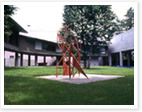 |
Studio
Artist’s studio maintained and preserved as he worked.
(Studio cottage designed by Junzo Yoshimura) |
|
 |
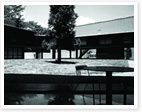 |
Patio & Cafe
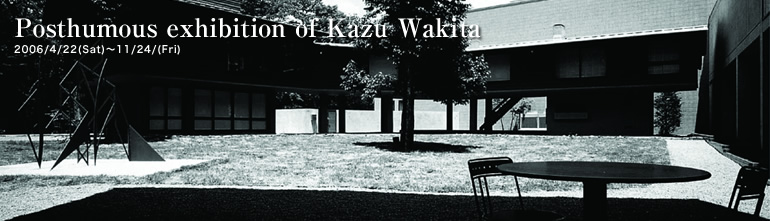
The clear sky and the sunshine filtering through trees… in the season when birds gathering to the Magnolia tree sing in harmony with the sound of wind, paintings and space play various harmony. The artist who loved Karuizawa painted great number of works here.
Please enjoy tea comfortably imagining the artist’s line of vision in the cafe facing the patio. |